Search This Blog

Showing posts with label Book Reviews. Show all posts

Sunday, May 25, 2014

Bob's Books - Branch Rickey by Jimmy Breslin

Jimmy Breslin has written a short, rather pithy biography of Branch Rickey. It’s sort of a wikipedia of Ricky bios. He feels the need to bring Barak Obama up in the very first paragraph. Which is rather amusing, since Rickey was a life-long Republican and Jackie Robinson supported Richard Nixon. Later in the prologue he gives you a list of the only Rickey books he considers worthwhile.

He seems determined to give you an, “aw shucks” approach to Rickey’s life; as if you were sitting on the front porch having a chat. Factually, I think he did pretty well, since he drew on a couple of the books on his approved list for his tome.

No book is expected to be error-free. But I sat up straight when I read Breslin’s statement that Jackie Robinson played in his first World Series in 1952. Any junior Robinson fan knows that he led the Dodgers to the Series in his rookie season of 1947, and most know that the team was back in 1949. Minimal research would have prevented this error.

Other than being a lot shorter than other Rickey bios, I don’t see why this was written. In the past month I’ve learned more about Branch Rickey (and the Robinson part of his tale) from books by Red Barber, Arthur Mann and Harvey Frommer. Breslin’s book absolutely isn’t worth the cover price (I bought it used). I can’t imagine using it as a resource in the future.


Jackie Robinson is my idol. And naturally, I hold Branch Rickey in great regard. There aren’t a lot of Rickey books out there, but the others are better than this one. And many of the Robinson books are more informative about Rickey than this one as well.

I've now read two books by Jimmy Breslin and wasn't impressed with either of them.

Saturday, May 24, 2014

Bob's Books - True Blue by Steve Delsohn

Several years ago, I read Nixon: An Oral History of His Presidency by Gerald & Deborah Hart Strober. The book was broken down into different topics and included comments from various people on those topics. They interviewed nearly a hundred people who had insights on various parts of Nixon’s Presidency. And it’s a fascinating inside look. I found it an excellent approach.

Steve Delsohn’s True Blue (subtitled The Dramatic History of the Los Angeles Dodgers, Told by the Men Who Lived It) is just such a book. After a chapter discussing the end of the days in Brooklyn, he looks at every Dodger season in Los Angeles, through 2000. And he interviewed over 100 persons, including scores of former players and coaches, to tell the story.

This is unlike any other Dodger history book on my shelves. Hear Stan Williams talk about Leo Durocher’s backstabbing of Walter Alston in 1962. Read the behind the scenes feelings that led to the famed Don Sutton-Steve Garvey fight. Get inside the clubhouse for Kirk Gibson’s team transformation in 1988.

I’ve always considered Juan Marichal a thug for hitting Johnny Roseboro in the head with a bat. But after reading Roseboro’s comments, I realize the catcher sort of brought the situation on (which his wife has said he admitted to).

Frank Howard, Rick Monday, Tommy Davis, Dave Lopes, Brett Butler, Ron Fairly, Kevin Kennedy: the guys who were there, on the field, in the dugout and up in the front office all tell you just like it was. I’m surprised there aren’t more books out there like this. An excellent read about the Los Angeles Dodgers

Monday, November 19, 2012

Bob's Books - Conan the Raider by Leonard Carpenter


Conan the Raider is the second of the eleven novels that Leonard Carpenter wrote in the fifty-book Tor series. In William Galen Gray’s chronology it is the sixtieth Conan tale, following Robert E. Howard’s The Man-Eaters of Zamboula (aka Shadows in Zamboula) and taking place before L. Sprague de Camp and Bjorn Nyberg’s The Star of Khorala.

This tale opens up with Conan chasing the man who had stolen a gem, the Star of Khorala from him. Our favorite barbar had obtained the Star at the end of Howard’s The Man-Eaters of Zamboula. While it does take place directly after that story, you need not have read it, as the tie-in to the actual plot is minimal.
This book could more accurately be called Conan the Tomb Raider, and I rather liked it. We get an inside look at the building of a massive pyramidal tomb, which, of course, Conan is going to rob. I liked the shadow that Stygia’s culture cast over neighboring Abaddrah in this book. Carpenter digs into the socio-cultural side of things, which I don’t find too often in the Conan pastiches. The Queen was a bit one dimensional, though.

As in Carpenter’s Conan: Scourge of the Bloody Coast, the hero is awfully forgiving of someone who betrays him. I think Carpenter is showing the practical side of Conan, but, in this book, at least, it seems that Conan will let bygones be bygones (even really, really bad things) if he can make a bit of coin in so doing. I think he undervalues the Cimmerian background too much in this one. Honor and revenge get short shrift.
Where there’s a necromancer, there are undead. I like the horror aspect they bring to this story:  there seems to be more substance to it than there was in Conan the Defiant. “Creepy” seems like  fair description.

Sex is implied with the sultry dancer who has the lead female role, and Conan is rewarded with a woman’s favors at the end of the book. But this one is low on the Conan sex scale.

Readers of Howard’s original Star tale might have wondered what happened next to Conan: this story answers that question, though 98% of the book is really a side trek in the Star’s saga. But it works.
The next Tor book published after this one was John Maddox Roberts’ Conan the Champion. With so many average (or worse) books in the Tor line, Raider and Champion were a rather solid back to back duo.  I found Raider, while not a great book, to be one of the more enjoyable Tor pastiches.

Thursday, October 25, 2012

Bob's Books - Conan the Buccaneer by L. Sprague de Camp & Lin Carter

Conan the Buccaneer, by L. Sprague de Camp and Lin Carter is the sixth book in the Ace series by  de Camp and Carter (and that Howard fellow…). In William Galen Gray’s chronology it is the seventy-fifth Conan tale, following Robert E. Howard’s The Pool of the Black One and taking place before Howard’s Red Nails.

When I read one of these books from the De Camp/Carter corpus, I try to remember that these were unusual. The glut of pastiches available to us today weren’t written yet. Fans of Conan only had Robert E. Howard’s original tales. The sword-swinging Cimmerian wasn’t yet quite the fantasy icon he is today (now THAT is understatement). So they were doing something new. The library of Conan tales was small and they were plowing relatively virgin soil.

Interestingly enough, he’s not a pirate this time out, and his buccaneering activities as a privateer for King Ferdrugo don’t really come into play much, except that he has a ready crew and ship available (which is certainly handy).

A nice aspect is the inclusion of Zarono and Thoth Amon, characters from Howard’s tales. Also, Sigurd and Juma are characters that appear in other de Camp and Carter stories. Bearing in mind that there weren’t very many Conan tales and the now prolific cast of characters, this was a treat to the fan.
On the Conan sex scale, this one is pretty modest. He becomes the love slave of an amazon queen (yes, seriously), but that’s about it.

What we do have is the standard quest for treasure and a damsel in distress. Basically, it’s a chase book. Conan chases a boat. Then he is chased. Then he chases it some more. Then he chases somebody else. There’s also a hurried voyage that is sort of a ‘chase after the fact.’ If you like Conan hurrying to and fro, you’ve got it here. Combat-wise, I’d say, for 90% of the book, it’s got the lowest body count of any novel-length tales in the entire saga. Possibly so even after the climax.

I rather enjoyed Conan the Buccaneer, though it isn’t a standout. Perhaps because it reflects a time before a relentless publishing schedule buried us in plot-thin Conan books (my last review was the execrable Conan the Indomitable). And, it does fill in Zaronos’ background. The fallen count is key player in Howard’s The Black Stranger, which was renamed (for the better) The Treasure of Tranicos by Carter/de Camp.

This one is definitely worth a read, but it doesn’t quite feel ‘weighty’ enough; though that certainly does not make it unique in that regard among stories of the muscle bound barbar.  

Wednesday, October 24, 2012

Bob's Books - Conan the Indomitable by Steve Perry

This is the third of the five novels that Steve Perry wrote in the fifty-book Tor series. In William Galen Gray's chronology it is the fifth Conan tale, following Sean Moore's Conan the Hunter and taking place before Perry's Conan the Free Lance. Since events in Indomitable directly follow those in Defiant, and include his trollop of the moment, Elashi, it's odd that Gray inserted Conan the Hunter in between those two Perry books.

So, a hermaphrodite, a nymphomaniac sorceress, a slutty desert babe, a sarcastic fool, a cylopes, a giant worm and Conan go into a cave...Sounds like a bad joke, eh? Well, it is. Conan The Indomitable is a direct sequel to Perry's Conan the Defiant: I gave that book a good review. This effort, however, is TERRIBLE. I haven't read every Conan pastiche yet, but this is the worst of those I have read.

One of the protagonists has all the depth of a teenage geek's imagination (and I was such a geek). The others don't offer much more. And you could see the demise of one character so far ahead that there was no suspense building for when it finally happened. I forced myself to finish this book so I would be qualified to review it. It was that bad. The alliance between two of the villains' lieutenants was the only interesting part of this story.

This is the last Conan book I would re-read. Stay away.

Friday, September 14, 2012

Bob's Books - The Friends of Richard Nixon by George Higgins


I have not read George Higgins’ highly acclaimed crime novel, The Friends of Eddie Coyle. I suspect, if I had, and had I liked it, I might have better appreciated his take on Watergate, The Friends of Richard Nixon. Though, since I didn’t particularly like the latter, it’s possible I might only have better understood the style, while still not caring much for it.

Higgins likes to be clever. This book oozes clever. It screams, “Look how witty I am. I am clever.” Here is ONE sentence on page four:

“To those bereaved by the works of murders; to those raped, robbed, mugged, dispirited by the loss of their possessions, or enraged by the violation of their children, or unalterably convinced that untrammeled traffic in dirty books, pictures and films will certainly proliferate rapists and child molesters: to that vast popular majority which fears that legal cession of a monopoly on the use of force, to the government, under the social contract, is not in fact a matter of unanimous consent, too – sedulous attention to the rights of those accused is not a welcome course of conduct.”

Throughout, Higgins’ book cries out, ‘I’m a good Boston lawyer and let me tell you about those bad White House people from California. And know lots of big words, too.’ I’m no Nixon fan, but Higgins’ writing makes one think of the ‘Eastern Establishment’ types that Nixon was always railing against. 

Higgins was a lawyer, including a US Attorney for Massachusetts and there’s no denying his insights into the system bring something to the table; they certainly give a unique look at Earl Silbert, who was the US Attorney for DC and led the initial Watergate investigation. He paints a more positive picture of Silbert’s efforts than most.

But, literally every page has at least one sentence like this: “It constituted recognition that the existence of additional defendants, one of them placed fairly high in ostensibly respectable circles, implied the possibility that one or more unidentified people might have it in mind to balk the orderly processes of justice.” 

Higgins should have spent less time trying to write highbrow prose and just put together sentences that a reader didn’t have to parse and try to understand. His opinions on the justice system and law enforcement are sometimes insightful and sometimes just condescending. I enjoyed some parts of this book, but on the whole, found it to be annoying. And that’s not usually a good thing to say about a book.

Monday, July 23, 2012

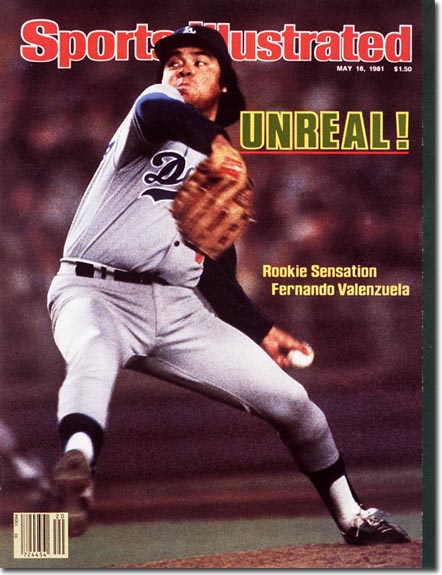
Bob's Books - High Fives, Pennant Drives and Fernandomania by Paul Haddad

My earliest baseball memories are of the 1974 Dodgers. So I was excited to sit down with Paul Haddad’s High Fives, Pennant Drives and Fernandomania. A look at the Los Angeles Dodgers from 1977- 1981, these were the men in blue I grew up watching and reading about in box scores. Though the west coast games often didn’t make the east coast newspapers the following morning; I often found “Late Game,” instead of the Dodgers’ results. In those pre-internet days, it wasn’t uncommon to go a full day or even two before finding out who won!
Fernandomania totally
swept America in 1981
But my elation was short lived. In the introduction, Haddad states, “…I am not a professional baseball writer. I am a fan.” And this book is absolutely not written by a real writer. Haddad recorded Vin Scully broadcasts during the time and made his own highlight tapes, incorporating his own commentary. So, he had a lot of firsthand information from that period. And he decided to throw them together into a book.  

The Dodgers had not won a World
Series since 1965; and had lost
their last two to the hated Yankees
There is a six page section on why he thinks The Bad News Bears is the best baseball movie ever. We are also treated to a sample of the Dodgers newsletter that he created at the time. A cowriter might have helped him shape this fan reminiscence into some semblance of a viable book. Instead, it’s kind of like reading through a scrapbook. He picks five games from each season to serve as representative of the year, with other miscellaneous stuff thrown in, like his thoughts on the movie, The Fan.


While I loved the subject matter (the 1974-1981 era in Dodgers history is woefully underreported), this is just about the worst book on the Dodgers that I have read.  It did wistfully remind me of my baseball card collecting days, but it just isn’t a very good tome. I hope someone else decides to delve into the Jimmy Wynn to Fernando Valenzuela days.

Glenn Burke 'invented' the high five as a
celebratory greeting to Dusty Baker.

Tuesday, July 17, 2012

Bob's Books - Witness to Power by John Ehrlichman

Memoirs from those involved in Watergate and the Nixon Presidency are a dicey proposition. Now, those involved in events have knowledge and insights not necessarily available from others. But, as we’re dealing with illegal and unethical activities, you can assume that the author is trying to look as good as he possibly can.
In Witness to Power, John Ehrlichman writes a very interesting biography that gives an inside look at the Nixon White House. In fact, Watergate is just a relatively minor portion of this book. And some of it is undoubtedly accurate. But, in light of what we know from the tapes, transcripts and other books on the subject, most of this tome should be taken with a grain of salt. Subtitled The Nixon Years, he breaks out several chapters based on his experiences with different areas, such as the Nixon Cabinet, the Congress, the President’s two brothers (oh, that Donald!) and such. The first three plus quarters of the book are not about Watergate. As such, it gives an awful lot of insights on the Richard Nixon Presidency. With so many books solely about Watergate and related matters, this makes the book stand out. Much of what he has to say is quite interesting, such as the Cabinet chapter.

George Romney was a popular Michigan governor and 1968 Presidential hopeful. He also fathered the Mormon 2012 Presidential candidate, Mitt. In 1970, he was Nixon’s Secretary of Housing and Urban Development, announced a cut in his own salary to help balance the budget. Nixon disparaged it as “an ineffective grandstand play,” and said he wanted Romney fired. While Nixon juggled cabinet members, he played it like a fantasy baseball game, talking endlessly about various moves before actually doing it: Romney didn’t leave until 1973. But two days after blasting Romney, he asked Ehrlichman how they could reduce the President’s salary by $25,000; while increasing his pension by the same amount. That’s a pretty good snapshot of the type of man Richard Nixon was.

Nixon’s dealings with his cabinet member make one think of a bully. He had little respect for most of them, yet hated confrontations, so he tried to appear that he appreciated them yet refused to actually meet with them. He ran an administrative presidency, where Bob Haldeman and John Ehrlichman were more powerful than his Cabinet members. His preferred tactic was to disempower Cabinet Secretaries in hopes that they would quit, rather than force him to fire them. Ehrlichman was often the man in the middle and recounts several instances of this sort of thing. Including two near revolts from Cabinet members who resented the barriers the President had erected before himself.

To quote Nixon on the Cabinet: “I’ve wasted a lot of time on the Cabinet problem. We should put more emphasis on the subcabinet and the Administrative wives (wives of appointees)….The boats and Camp David – that has now been done, as afar as the Cabinet is concerned. No more. The Cabinet has no divine right to such things.” Nixon was a petty and power hungry man.

We also learn of Nixon’s active attempts to get rid of sitting Supreme Court judges so he could appoint his own ‘strict constructionists.’ Those early nominees are largely forgotten today, but the names Clement Haynsworth and Harold Carswell do not reflect well on Richard Nixon’s character.

Ehrlichman, not known for a sharp wit, displays such in his writing. However, his justification of his confrontational approach to the Senate Watergate Committee rings hollow and (justifiably) he clearly feels bitterness towards Richard Nixon. Nixon, who was pardoned for any crimes he might have committed, escaped Watergate scott free (having to quit your job and head into a cushy retirement because you did illegal things isn’t exactly cruel and unusual punishment) while many of his underlings, carrying out his orders and policies, went to jail. And as you might have guessed, he’s not much of a John Dean fan.

I think Ehrlichman is more culpable than he relates in the book, and he soft soaps many of Nixon’s actions (Nixon demanded the resignation of hundreds of his employees after being re-elected in 1972: nice reward for hard work. Ehrlichman dismisses this with the same gravitas as if the President didn’t like his salad dressing and sent the order back). But I also think he did work hard on domestic policy issues and did the president’s bidding, which earned him jail time and loss of his law license. This is a good look at one man’s experience working for the Nixon White House.
His lasting image as a combative
witness at Senator Ervin's
Watergate Committee Hearings

Tuesday, July 10, 2012

Bob's Books - A Year at a Time by Walter Alston with Jack Tobin

Walter Alston managed the Brooklyn and Los Angeles Dodgers for twenty three seasons, beginning in 1954. He replaced the popular Chuck Dressen, who had demanded a multi-year contract after three consecutive first place finishes. (1951 was actually a tie for first). Team owner Walter O’Malley thanked Dressen for his services and pushed him out the door. The headline in the New York Daily News after the introductory press conference read, “ALSTON (WHO’S HE) TO MANAGE DODGERS.”

Alston brought Brooklyn its only World Series title in 1955 and would finish with a total of seven national league championships and four World Series wins. In 23 years. The Dodgers have won two World Series in the thirty-six years since he retired. And one of those was largely composed of players he had in his final season of 1976. He was elected to the Hall of Fame in 1983; a year before he passed away.

Walter Alston is a small town man who was a genuinely nice guy. Leo Durocher is famously (mis)quoted as having said ‘Nice guys finish last.’ Well, in this case, nice guys write bland autobiographies. Alston writes about his life in Darrtown, OH (where he lived his entire life) almost as much as he does about managing the Dodgers. Okay, that’s a slight exaggeration, but not as much as you might think.  He offers some insights into his pennant seasons in Brooklyn, but not a lot of them.


As a player, Alston played 13 seasons in the Cardinals minor league chain. He did get to bat once in the majors; for the Cards in 1936. He struck out! But he spent several years as a player – manager in the minors, which prepared him for his future career. Alston was a Dodgers rarity: he was a Rickey man whom Walter O’Malley took into the fold. As poorly as Harold Parrott thinks about the Irishman, (see my review of his book, The Lords of Baseball, for a very negative view of O’Malley), Alston thinks well of the long time owner.
The skipper does talk about Lou Johnson bailing out the 1965 season, and how unbelievable Sandy Koufax was even as the lefty’s arm was disintegrating from arthritis. But there’s just not as much information on his Dodgers teams as you would expect. Alston mentions that he believes if you don’t have anything nice to say, don’t say anything at all. Unfortunately, that makes for a rather boring book.

Tommy Lasorda had a heart attack partway through the 1996 season and had to retire. For forty-two and a half seasons, only two men managed the Dodgers. And both are in the Hall of Fame.  Since Lasorda stepped down, the Dodgers have had seven managers, none of who made it to the World Series.
Walter Alston was a symbol of the stability of the Dodger organization for parts of three decades. This book takes us through 1974, so he had two more years left as a manager. So, there is no discussion of Tommy Lasorda’s taking over the team after the 1976 season. Though I doubt Alston would have written anything negative, anyways.

Walter Alston was a Hall of Fame manager and a very good man.  I am a fan. This just isn’t a very interesting biography.

Wednesday, July 4, 2012

Bob's Books - Nightmare: The Underside of the Nixon Years by J. Anthony Lukas


I first read J. Anthony Lukas’ Nightmare: The Underside of the Nixon Years, a couple of decades ago. Though details faded as I aged, I retained the impression that it was just about the best book on Watergate I had come across. With my collection now inching towards a hundred volumes, I decided to revisit Lukas’s tome and see how it actually stands up.

This book from the two time Pulitzer Prize winning reporter and author grew out of articles which he wrote for the New York Times Magazine (two full issues consisted of only his writings on Watergate): plus a third that was commissioned but scotched when Nixon resigned the Presidency.  Lukas sets the stage with the unsuccessful (for the Republicans) 1970 midterm elections and the state of civil unrest in Washington in 1971. Then he leads us into, and out of, Watergate.

Lukas’ comprehensive but not overwhelming look at his subject matter is well laid out, as evidenced by the chapter titles: Fear of Losing, State of Siege, Leaks and Traps, Plumbers, Dirty Money, Dirty Tricks, Break-in, Cover-up, Uncover, Houses in the Sun, Tapes, Agnew, Firestorm, Operation Candor, Impeachment and Resignation. Watergate was not simply a ‘third rate burglary.’ It was an event that grew out of the Nixon administration’s increasing combativeness and declining respect for the law.

Bob Haldeman (L) and John Erlichman (R) were Nixon's
'Palace Guard' and went to jail for their illegal actions:
something Nixon, the chief architect, was spared.
Some books use Nixon’s flawed character development to show how the operating culture of his White House evolved. And certainly, other Watergate volumes provide information and theories not included in this book. But Lukas takes a direct path approach, from point A to point B (or to Z) and it works. By the middle of Chapter 3 (Leaks and Taps, which is about the wiretapping of employees and enemies, both real and perceived), you recognize that the Nixon White House viewed governing as one hundred percent “us against everybody who is not with us” and that the end (getting our enemies) justified the means (whatever possibly or blatantly illegal methods we used). While this is serious stuff, there are some Keystone Kops type moments: such as discovering that the Secret Service (presumably at the direction of Bob Haldeman and John Erlichman) wire tapped the President’s brother, Donald Nixon because he was a cause of embarrassment.

But things got less amusing as the paranoia and arrogance of power grew. Egil ‘Bud’ Krogh Jr. (who did jail time related to the Plumbers’ activities) is quoted in 1971 as saying, “Anyone who opposes us, we’ll destroy. As a matter of fact, anyone who doesn’t support us, we’ll destroy.” As Lukas explores the Plumbers unit and campaign finance shenanigans (that’s a soft word for unethical, illegal actions), it’s clear that the Nixon Administration has lost both perspective and any kind of moral compass (you can argue Nixon lost that years before).

Lukas’ narrative leaves the reader wondering if things would have reached such critical proportions if Henry Kissinger hadn’t convinced Nixon that the leaking of The Pentagon Papers by Daniel Ellsberg was devastating to national security; for Early on, Nixon realized that it was the prior administration of Lyndon Johnson which would look bad on Vietnam, not his. It is in the response to Ellsberg’s actions that we see the seeds of Nixon’s downfall sprout into towering trees. Though, as you dig deeper into the book, you realize Nixon’s flawed personality was as fatal as Achilles’ own heel.
The President, the Attorney General, the White House Chief of Staff, special counsels, the Domestic Policy Advisor, staffers at all levels; all the president’s men broke the law and/or acted unethically time and time again. It’s shocking to read, decades later. Lukas paints a picture of all the president’s men doing everything they could to make sure the truth of the Watergate break in did not come to light. And this was in large part due to all the other illicit and embarrassing activities that would be exposed to the light of day. And that includes his lack of ethics regarding his personal taxes and willingness to spend public money on his private properties.

Nixon's net worth went through the roof during his Presidency.
This is part of one of the two 'satellite offices' he established (in
San Clemente, CA; the other was in Key Biscayne, FL).

Richard Nixon had three priorities, from least to greatest: the American public, the presidency and himself. Nightmare paints a vivid picture of an administration that believed it could do anything it wanted, however it wanted. After his resignation, Nixon famously said, “Well, if the president does it, then it’s not illegal.” That’s a pretty good epithet for his presidency. Nixon did not have a disdain for the law: he had an utter contempt for it. And he was willing to betray his oath of office and sacrifice the office of the President for his own interests.

If you buy into the misleading mantra, “it wasn’t so much the crime, it was the cover-up,” you need to read this book. It was a staggering combination of both. Thirty-nine years after its first publication, Anthony Lukas’ Nightmare remains perhaps the finest account of Watergate and the events surrounding it.

Monday, June 25, 2012

Bob's Books - Brooklyn Dodgers: The Last Great Pennant Drive, 1957 by John Norden, Jr.

Brooklyn Dodgers: The Last Great Pennant Drive, 1957, is a Kindle ebook by John Nordell, Jr. The book is essentially a  look at the season's box scores, with a short summary of the various games. I am a devoted Dodgers fan and love reading about the Brooklyn years. But this book, quite simply, is dull. It reads like someone, well, summarizing box scores. Without any of the numbers that give box scores their magic.

There’s not really much else for me to add. It’s the first book about the Dodgers I’m certain I’ll never re-read. This is one of my shortest reviews ever, but I don’t have much  more to say. If you want a good book on the subject, give a look at The Last Good Season: Brooklyn, the Dodgers and Their Final Pennant Race Together by Michael Shapiro.

Thursday, June 21, 2012

Bob's Books - In Nixon's Web by L Patrick Gray III with Ed Gray

In Nixon’s Web, by the late L. Patrick Gray III, with Ed Gray (his son), is another memoir by a Watergate Era figure. I hesitate to call Gray (all uses of that name will refer to the elder) a “participant,” as he was never convicted of any wrongdoing. Of course, neither was Nixon..

Many of the major figures in Watergate have written memoirs, including G. Gordon Liddy, John Dean, Jeb Magruder, Bob Haldeman, John Erlichman, Maurice Stans, Nixon himself, and quite a few others. And there are plenty of books by journalists, experts, hacks, et al. Gray has come off poorly in most accounts and set out to ‘set the record straight’ (the name of Judge John J. Sirica’s book on Watergate).

To summarize, Gray was a successful naval man, actually commanding a submarine. He went to work for Nixon, was on a successful path at the Department of Justice and was selected by the President as acting director of the FBI upon the death of J. Edgar Hoover in 1972. It did not turn out to be the career move that he hoped for.

Mark Felt (Deep Throat) played
an integral role in Gray's time
at the FBI
It’s no surprise to find that Gray was viewed as an outsider. Several inside the Bureau hoped to take over: especially Mark Felt. Gray relied heavily upon Felt and refused to believe White House accusations that the career FBI man was actually ‘Deep Throat,’ Woodward and Bernstein’s secret informant. In fact, Felt’s revelation that he was Deep Throat came only a few weeks before Gray’s death from pancreatic cancer. The book offers “proof” that Felt could not have been the source, which is worth looking at, but not conclusive.

I believe that Felt quite likely was providing information to Woodward, and that information that the reporter received from other sources was included under the Deep Throat moniker, in addition to Felt’s stuff. Which would address Gray’s objection.

Presidential Counsel John Dean gave two files to Gray, in front of John Erlichman in the latter’s office. The files were from E. Watergate burglar’s E. Howard Hunt’s White House office safe and Dean told Gray that they contained national security information, had nothing to do with Watergate and should “never see the light of day.” Gray kept them for several months and then burned them. He felt that he had been ordered to do so with the President’s tacit approval, via Erlichman’s presence.


Gray also provided FBI files on the Watergate investigation to Dean, which he felt obligated to do since the FBI was an executive office. Dean was “the desk manager” for the cover up. Uh oh.

Unlike many of the memoirs I’ve read, Gray comes across as a man of integrity. Like other Watergate figures, he was used and tossed aside by Nixon. He was under extreme fire during his Senate Confirmation hearings to become permanent FBI director. While being told to his face that the White House supported him, behind the scenes they were stabbing him in the back. Erlichman was speaking of Gray when he said, “Well, I think we ought to let him hang there. Let him twist slowly, slowly in the wind. “ In typical Nixon fashion, one of his people would be sacrificed for the White House’s own purposes.

Gray was an outsider at the FBI, dealing with the after-effects of Hoover’s reign of intimidation. And he was an outsider among Nixon’s Palace Guard, sacrificed for self-preservation. Both the Watergate Special Prosecution Force and the Department of Justice investigated Gray, but all charges were dropped and he was exonerated of any wrongdoing. But Gray’s legacy is tarnished by the accusations of John Dean and Woodward and Bernstein. He did destroy the Hunt files, which certainly appears naïve, if not an obstruction of justice. But I would believe Gray’s account of events before that of just about any other Watergate figure.

Monday, June 18, 2012

Bob's Books - Bums No More by Stewart Wolpin


Bums No More, by Stewart Wolpin, is about THAT season. In the first forty World Series’, the Brooklyn Dodgers were 0-2.  And they were bad for a lot of those seasons, usually finishing in the second division. Larry MacPhail moved into the front office and righted the ship, with the team losing the 1941 World Series. A fellow named Jackie Robinson joined the team in 1947 and the Glory Years of Brooklyn baseball were underway. Between 1947 and 1956, the Dodgers appeared in six World Series. All were against the cross-town Yankees, and all were losses. Except for one. As the beloved once-Bums annually came up short in the Fall Classic, Brooklynites cried out, “Wait ‘til next year!” 1955 was finally Next Year.

Johnny Podres won 136 games for Brooklyn and Los
Angeles, including game two on his birthday. But none
were bigger than his complete game outing in the finale.
Subtitled The Championship Season of 1955, this book recounts the year that Gil Hodges, Duke Snider, Roy Campanella, Johnny Podres, Robinson and the other Boys of Summer won that elusive World Series. The first chapter gives a primer on the Dodgers. The stage is set for spring training in Vero Beach and the magical season is under way. First and foremost, this relatively slim book (130 pages, counting the index) is jam packed with photographs. The surfeit of pictures alone makes this book worthwhile for the Brooklyn Dodgers fan.

Ebbets Field, Jackie Robinson watching the Giants celebration of Bobby Thomson’s ‘Shot Heard Round the World’ as Ralph Branca walks away, head hanging, Duke Snider leaping in center field, lots of clubhouse shots, Sandy Amaros’ catch, fans in line for tickets, parades, celebrations: there are over 100 illustrations (all black and white, of course). It is a treasure trove of Brooklyn and the Dodgers in their lone season as World Series champs. If you believe in the magical aura of baseball in the ‘old days’ before overpriced superstars, and you have a feeling for the bond between fans and their home town teams back then, the picture of Ebbets Field on Pee Wee Reese night will give you goose bumps.

After a LONG run, Sandy Amoros grabs what might be the most important
catch in World Series history. Manager Walter Alston had just inserted
Amoros into the game as a defensive replacement that inning.

The writing does not come up short, either. You get a look at Walter Alston’s relationship with the team (he and Jackie Robinson were not friends). And you sense the looming storm as the Dodgers receive permission to play seven games in Jersey City. Only two seasons after Johnny Podres records the last out in game seven, the team would be the Los Angeles Dodgers.

The book contains many comments and remembrances from Brooklyn fans, most notably, Larry King. You get a sense of what the Dodgers meant to community and how Brooklyn lived and died with ‘Dem Bums.’ It ends with borough president John Cashmore talking about a new stadium and saying, “The Dodgers must never leave Brooklyn.” Well, they did.
As a fan of Dodgers history, I really liked this look at the 1955 season.  It’s an easy read and doesn’t take very long. But it captures the relationship between Brooklyn and the Dodgers and gives a look at the year the heartbreak ended: For a little while, at least. And you absolutely cannot beat the photo library.

Here’s a link to the New York Times story on game seven. The first sentence sums it up well.

Quite possibly, there has never been a more joyous
moment on the baseball field

Monday, June 11, 2012

Bob's Books - The Lords of Baseball by Harold Parrott

The Lords of Baseball is an insider’s look from Harold Parrott. Parrot was a sportswriter for the Brooklyn Eagle who became the travelling secretary for the Brooklyn Dodgers during Branch Rickey’s tenure. He moved to Los Angeles with the team and became the ticket manager: the same position he held with the San Diego Padres and Seattle Pilots, as well as promotions manager for the California Angels.

First off, there is some fascinating stuff. There are plenty of baseball books by players, managers and sports writers; even a few owners (hello, Bill Veek). Plus, the occasional tome from a baseball-side executive, like Parrot’s long time coworker, Buzzy Bavasi. But it’s rare to find an informative account from an operations person, like Parrott. Having said that, a caveat: Parrott is a bitter writer.
There is a caveat for this book: Parrot is a bitter man. His dislike of the owners, various and sundry individuals, and most certainly, Walter O’Malley, cannot be described as “thinly veiled.” It is palpable, jumping off of page after page. A description of O’Malley, when the owner was calling Parrot’s wife to try and get her to coax Parrott to take a promotion, sums it up well: “…he was the villain who had forced our dear Mr. Rickey to walk the plank.” It’s safe to say you’re not going to get a lot of unobjective commentary from the ex-reporter on that topic. Now, that’s not to say Parrott isn’t honest, accurate, etc… I subscribe to Bill Terry’s statement that “Baseball must be a great game to survive the fools who run it.” Major League Baseball succeeds in spite of itself. Richard Nixon famously said, “I gave them a sword, and they stuck it in and twisted it with relish.” This book is Parrott’s sword and he’s happily twisting it.

O'Malley (left) would drive
Branch Rickey out of Brooklyn
Parrott stories and insights into the behind the scenes stuff over three decades (the game has changed mightily) are attention worthy. Branch Rickey regularly outwitted Pirates owner John Galbraith on trades. When the Dodgers won a World Series, some employees were given rings. O’Malley required them to turn in a previous ring (if they had one before they could receive the new one. Apparently you weren’t allowed to have two rings.  And Parrott says that O’Malley was going to fire manager Walter Alston in 1974 and bring back Leo Durocher. But the Dodgers hit a winning streak, Alston was kept and the Dodgers went to the World Series. That’s a story I’ve only run across in this book.
A particularly great look inside is when Parrott tells the story of how he had to inform Leo Durocher in mid-season 1948 that The Lip was fired. Naturally, Parrott was worried. Durocher had been thrown out of the first game of a doubleheader and was in a foul mood, shaving in his office, razor in hand. And Parrot wants to hurry up and do the deed because…he was also afraid of Durocher’s fiery wife, movie star Larraine Day. He wanted to be done and gone before she made her regular visit to see her husband. Understandably, Durocher is pissed at Branch Rickey, who had given Parrott his instructions from a hospital bed. Which he apparently checked out of as soon as Parrot was gone: Rickey fled to his farm in Maryland. Durocher’s Dodgers kept winning and he wasn’t actually fired. Except that Rickey arranged for Horace Stoneham, owner of the Giants, to buy Durocher to be his manager. Afterwards, Parrott went into Durocher’s empty office. Day had taken everything personal, leaving behind just one thing. An autographed picture of Rickey, addressed to her. That was left in the toilet.

Durocher going from the Dodgers to the Giants in 1948 is on the record. But Parrott gives the reader so much more. The book is full of stories like that.
Rare photo of actual Seattle Pilots game play at
Sicks Stadium in 1969. Parrot gives the inside
story on how the owners set the franchise up
for certain failure through...
If you accept that the author has quite a bit of disdain for much of the subject matter, this is an excellent read and provides a great deal of information that you aren’t likely to find somewhere else. I would buy this just for the Durocher and Jackie Robinson stories alone. You also get a look at the old days of sports reporting and the newspaper business (the Brooklyn Eagle was printing FIVE editions a day: sometimes more when events warranted). Parrott had an adventurous life in baseball and it is fun to read about. I think this is the best ‘baseball insider’ book I’ve read yet.

...Dewey Soriano: the
original Frank McCourt

Tuesday, June 5, 2012

Bob's Books - Superstars and Screwballs by Richard Goldstein

Richard Goldstein’s Superstars and Screwballs is an outstanding look at, as the subtitle proclaims, 100 years of Brooklyn Baseball. You will be hard pressed to find a better start to finish history of the Brooklyn Dodgers that also goes back beyond that franchise’s nascent beginnings. Goldstein begins with the flourishing of the not-yet national pastime in the CITY (not borough) of Brooklyn.  The Atlantics, the Eckfords, the Excelsiors, the Mutuals and more competed in the city’s parks.


Bennie Kauf (second from right) of the Brooklyn
Tip Tops was the Federal League's best player
Brooklyn teams were at the heart of the National Association of Base Ball Players (9 of 11 championships went to Brooklyn squads), the National Association of Professional Base Ball Players (it wasn’t an amateur game anymore), the American Association, the one-year Player’s League (which resulted in construction of The Polo Grounds) and the Federal League. While ‘Dem Bums’ still cast their long shadow over baseball history, the sport was deeply enmeshed in Brooklyn culture and played by a myriad of teams.
But it is the Dodgers that are the enduring image of Brooklyn baseball and Goldstein gives us a great look at the franchise from their first season in 1883 (as a the minor league ‘Grays’) through the final 1957 pennant race. The Dodgers joined the American Association and then the National League, going through several name changes before settling on the Dodgers, abbreviated from ‘Trolley Dodgers.’ The first World Series was played in 1903, and in the days before divisions, the best team in each league played for the ultimate title: there were no playoffs. From 1903 to 1940, the Dodgers managed only two National League pennants, coming up short both times against their AL counterparts.
Three Hall of Famers: Manager Burleigh Grimes, coach
(and potential successor) Babe Ruth and short stop
(and actual sucessor as manager) Leo Durocher
There were a few  Hall of Famers like Zach Wheat, Dazzy Vance and Burleigh Grimes, and manager Wilbert Robinson. And some pretty good players, such as Babe Herman, Nap Rucker and Jeff Pfeffer, though they usually brought up the second division, finishing under .500 twenty-six times. But the team was interesting to read about, be it three runners standing on third base during a game, or Hall of Fame pitcher Rube Marquard being arrested for scalping tickets on the same day he was pitching in the World Series. Known as ‘The Daffiness Boys’ for most of this period of ineptness, Goldstein gives us a look at both the Dodgers and baseball at large during the period.
The legendary home of the Dodgers from 1913-1957 
Then, in the forties, front office exec Larry MacPhail transformed the Dodgers into winners, building a team that won a Brooklyn pennant for the first time in twenty-one years. Five years later, Branch Rickey brought in Jackie Robinson to break the color barrier and before long, Walter O’Malley took complete control and moved the team to Los Angeles. Goldstein covers it all, bringing you from the beginning of Brooklyn baseball, through the lean years of the Dodgers and onto the final glory years when the Yankees, Giants and Dodgers dominated the sport, coming to an end after 1957. And the stuff in the forties and fifties is great reading for a true baseball fan.
This is an excellent recounting of baseball in Brooklyn, dropping in details of fund raising efforts during the war years, behind the scenes ownership battles, the semi-plan to have Babe Ruth manage the Dodgers, and so much more that gives you a deep understanding of its subject. That includes black baseball, with a Brooklyn history of over eighty years during the game’s segregated era. Superstars and Screwballs remains the best book I’ve read on the history of the Dodgers franchise.
'Wait Til Next Year' was the Dodgers' fans' lament
after each World Series loss to the hated
Yankees. 1955 was finally 'Next Year'

Thursday, May 31, 2012

Bob's Books - Temporary Insanity by Jay Johnstone and Rick Talley

Jay Johnstone was an interesting baseball player. He played twenty seasons in the major leagues as an outfielder, primarily being used as a pinch hitter for the last few years. For his 162 game average, he hit .267 with 9 homers and 5 stolen bases (and 5 caught stealing). Nothing spectacular, but good enough to keep him in the game for a long time.

But as you might guess from the book title, Temporary Insanity (not like the cover gives it away), Johnstone was a character. And while this book does convey that he worked hard to be a good hitter and fielder and that he played to win, he viewed keeping a team loose and laughing as a key part of his job. This book isn’t The Boys of Summer, or a Lou Gehrig biography, but it is one fun read.

Johnstone had over a thousand hits in his career; he may have had more pranks. His favorite target was Tommy Lasorda and the Dodger stuff alone is worth the price of the book. For example, Johnstone once used a rope and palm tree to lock Lasorda in his room at Dodgertown (formerly the team’s spring training complex in Vero Beach), causing the manager to miss breakfast before the day’s bus ride. Lasorda was not a man to miss meals. Once, during a real game, Lasorda looked up at the DodgerVision screen between innings to find Johnstone and teammate Jerry Reuss dressed up as groundskeepers, dragging the field. Teammates and managers alike received Johnstone’s attentions.

With AAA Seattle.
The Majors have no idea
what is coming
He also talks about other baseball oddballs he encountered or heard stories of. Moe Drawbowsky was a well-travelled relief pitcher from the fifties into the seventies. He once called Hong Kong from the bullpen phone and ordered Chinese takeout (they wouldn’t deliver). Having been traded from the A’s to the Orioles earlier in the season, when the two teams were playing, he called over to the A’s bullpen, imitated his former manager’s voice and instructed a coach to warm up a relief pitcher. There are plenty more.

Sometimes it was just a few words. Interviewed for NBC’s ‘Game of the Week’ (ballplayers were largely seen and not heard back then), he said, “I drove through Cleveland one day and it was closed.” The Mayor of Cleveland called NBC the next day and demanded an apology.

This is the first of three offbeat baseball books that Johnstone did with sportswriter Rick Talley. What comes through is a guy who took being on the field seriously, but who also knew that he was making a living at a boy’s game and wanted to make sure he enjoyed it. As I mentioned earlier, it’s fun. And that’s a good quality for a baseball book.

After the Dodgers beat the Yankees to win the 1981 World Series, Johnstone, Reuss, Rick Monday and Steve Yeager cut this record. They even sang it on Solid Gold. I consider this one of Johnstone's greatest pranks.

It's a put on, but it's still as bad as it looks

Tuesday, May 29, 2012

Bob's Books - Sherlock Holmes: In His Own Words and the Words of Those Who Knew Him by Barry Day

There have been many quote books about Sherlock Holmes. Quotable Sherlock and The Complete Guide to Sherlock Holmes are two such offerings with many fine sayings from the Canon. And notables such as Vincent Starrett, William Baring Gould, Michael Hardwick and Michael Pointer have offered up biographies of the world’s first consulting detective. Barry Day approaches these matters in a new way.
 
Sherlock Holmes (In His Own Words and in the Words of Those Who KnewHim) is a book that gives us a non-chronological biography of Holmes and the people around him, through extensive quotes from the original stories. You would be hard pressed to find a page that doesn’t have at least four quotations, and most have more than that. Holmes, his methods, Baker Street, the police and villains, and of course, Watson, are all discussed using Sir Arthur Conan Doyle’s own words about them all.

It is fun to read speculative biographies of Sherlock Holmes. But Day does not venture into that field. He tells us what is definitively known, and he does it with lines from Holmes, Watson and the rest of the Canon’s cast of characters.

The book also looks great, with over sixty black and white illustrations. There is a plethora of Paget, and we see Frederic Dorr Steele’s work before even the introduction. But George Hutchinson’s depiction of the first meeting between Holmes and Watson is shown. We see Watson and the nefarious Baron Gruner as depicted by Howard Elcock. Original drawings by Charles Doyle (Sir Arthur’s father), D. H. Friston, Walter Paget (Sidney’s brother) and J. Frank Wiles can be found as well. There’s something about reading Doyle’s words with an illustration in the vicinity.

Barry Day’s book is one of the most refreshing I have come across. Combining a biography with a quotation text creates a new look at an old subject. That is no easy task in the world of Sherlockiana. I enjoyed the look and flow of this book.

Tuesday, May 15, 2012

I Live for This by Tommy Lasorda and Bill Plaschke


This is a tough book to review. I like Tommy Lasorda. He is the face of the Dodgers to me, as I began following the team about 1974, just before he become their manager. And regarding baseball, the Dodgers, America, God and (sometimes) being a nice guy, he is a shining example. But in several parts of this book, he comes across as annoying, argumentative, self-absorbed and kind of a jerk. I liked Lasorda more before I read I Live For This.

The book doesn’t follow a straight chronological path, which makes for a more interesting read than the traditional biography route. Because Lasorda is, well, Lasorda, there is no shortage of anecdotes and vignettes to insert. And many of them are certainly entertaining. Tommy Lasorda bleeds Dodger blue: anybody who knows about him knows this, and the book reflects it. No surprise. But we get a look at what makes Lasorda tick: he is fighting the world all the time.
Lasorda refused to admit defeat. As a kid, he needed a baseball glove, so he stole one. A pitcher of marginal talent, he pitched a total of 26 games over three major league seasons (he lost a roster spot to Sandy Koufax in 1955: Lasorda says it took the greatest lefthander ever to keep him out of the majors), though he was a successful minor league pitcher. But as a player, a scout, a coach and a manager, life is a war to Lasorda. One he refuses to lose. It made him the Hall of Famer he is. But it also made him someone you don’t necessarily like, or always admire.

Don’t get me wrong: Lasorda did a lot of good things and certainly helped a lot of baseball players succeed. And he truly is an ambassador for the sport that we’re unlikely to ever see again. And much of the good about Lasorda comes out of this book. Like how he treats low level staffers and efforts to help inner city kids learn baseball. But it’s hard to come away from this book without some negative vibrations.

We do get some inside looks at situations within the Dodgers franchise, like the rift between Lasorda and his successor and former player, Bill Russell. And the exchange between Lasorda and Doug Rau during the first inning of a World Series game is amusing. Sort of. Plus, you’ll learn how Tommy became the national face, or waistline, for a then-unknown product called Slim Fast.

I was intrigued by the book’s ending. The Fox/Murdoch team had effectively banished Lasorda to Siberia. He had no real role with the Dodgers, nor, according to the book, was he respected or valued at all. But then Frank McCourt and his wife bought the team and Lasorda was established as McCourt’s right hand man. Essentially, he was reinstated as Chief Advisor to the new King, if you will. Lasorda says, “You know what the MCourts gave me? They gave me back my prestige, my honor, my dignity. They gave me back my life.” I’d guess this was said somewhere around 2006. Now, in 2012, after the long, dark tea-time of the Dodger’s soul that was the McCourt Era has passed, I wonder how Lasorda feels about the man now?


I think Tommy Lasorda is a great boon to major league baseball, and he is certainly an important part of Dodgers history. I’m a fan. And you’ll enjoy learning how he got Mike Piazza signed and coached the US Olympians to a gold medal, but if you read I Live For This, be warned, your perception of him may change a bit.